Details for 'A British Childhood' by Frank Cottrell_Boyce
A British Childhood
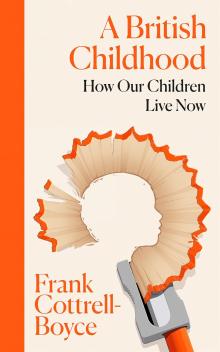
The former children's laureate decided to write a book calling up something of all he'd experienced and concluded from his two years touring the country visiting schools, libraries and prisons, discovering something of how children today are enjoying reading. He melds this with recollections of his own childhood and also how he instilled a love of books and storytelling in his own family. It's a fascinating read.
Each chapter is given a reference to a classic of children's literature, everything from 'The Very Hungry Caterpillar' to 'The Railway Children'. There isn't always a strong link to the book in question, but sometimes there is - I was reminded of the terrible struggles E Nesbit experienced in her life and determined to read her biography.
Cottrell-Boyce begins by telling us how, in the aftermath of the pandemic, he asked teachers what had changed in children's behaviours since lockdown. Many of the things they shared are quite shocking. And one of the things was the lack of familiarity with books - how children didn't even know how to handle a book, wanting to swipe a page rather than turn it, and expand a picture with their fingers to try and see it more clearly.
In talking to experts and practitioners, Cottrell-Boyce discovers that instead of cramming young brains with new things - there can be a tendency for some parents to want very young children to be taught Mozart or different languages - we should encourage familiarity. Not more stories, or new vocabulary but profound emotional connection through the ritual of reading.
'A great story creates fun. Shared fun creates trust. Trust is the greatest bond,' he says.
Babies acquire information rapidly but they process it slowly. The philosopher Kierkegaard thought that the larger our consciousness, the more things we'd have to be anxious about. Which is perhaps what we're seeing in society generally today - 'our brains are permanently wired up to the great anxiety drips of our endless online feeds'.
Cottrell-Boyce quotes from the writer Graham Greene who commented in his essay 'The Lost Childhood' that 'perhaps it is only in childhood that books have a deep influence in our lives. In later life we admire, we are entertained, and we may modify some views we already hold, but we are more likely to find in books a confirmation of what is in our minds already. In childhood all books are books of divination, telling us about the future.'
This is a very readable, informative and thought-provoking book from a writer who is hugely inspiring in his passion and commitment to encouraging a love of reading in children.